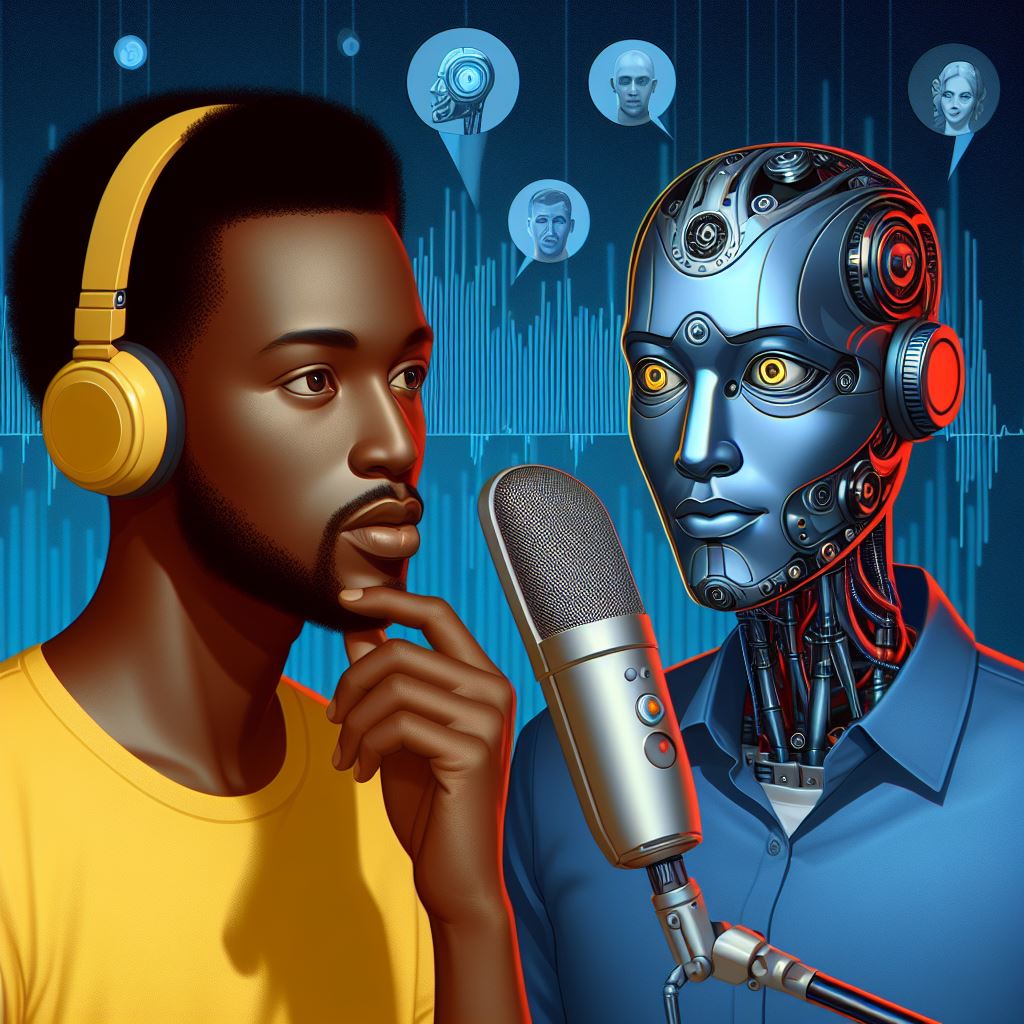
Voice is a powerful tool for communication, entertainment, and education. It can convey emotions, intentions, and personalities, as well as information and stories. But how do you choose the right voice for your project? Should you use an AI voice generator or a human voice actor?
AI voice generators are software applications that use advanced machine learning algorithms to synthesize natural-sounding human speech. They can produce speech in dozens of languages, accents, and tones, and can switch between them seamlessly. They can also generate speech from text, audio, or images, and can modify the pitch, speed, and volume of the voice.
Human voice actors are skilled professionals who lend their vocal talents to bring characters, narratives, and brands to life. They have unique abilities to infuse authenticity and emotions into spoken words, creating connections with listeners on a profound level. They can also offer diverse tones, accents, and nuances that elevate content through their artistry.
Both AI voice generators and human voice actors have their pros and cons, depending on the type, purpose, and audience of your project. In this article, we will compare the benefits and drawbacks of each option, and help you decide which one is best for you.
Pros and Cons of AI Voice Generators
AI voice generators have several advantages over human voice actors, such as:
- Consistency and accuracy: AI voice generators can produce speech that is consistent in quality, tone, and style, without any errors, pauses, or hesitations. They can also ensure that the pronunciation, grammar, and spelling of the speech are correct, and that the voice matches the text.
- Time, cost, and efficiency: AI voice generators can produce speech faster and cheaper than human voice actors, who may have limited availability, high rates, and long turnaround times. They can also generate speech on demand, without any need for booking, recording, editing, or reviewing.
- Flexibility and versatility: AI voice generators can produce speech in multiple languages, accents, and voices, and can switch between them easily. They can also modify the voice according to the preferences and needs of the project, such as changing the gender, age, or emotion of the voice.
However, AI voice generators also have some limitations, such as:
- Lack of expressiveness: AI voice generators can emulate emotions to some extent, but they may not be as rich or genuine as human expressions. They may also struggle to capture the subtleties and nuances of speech, such as sarcasm, humor, irony, or sarcasm, or to convey the personality and character of the voice.
- Lack of creativity: AI voice generators can produce speech based on the input they receive, but they may not be able to generate original or creative content, such as jokes, stories, or songs. They may also lack the ability to improvise, adapt, or respond to feedback or changes in the project.
- Lack of trust and connection: AI voice generators can produce speech that sounds natural, but they may not be able to create a trustful and emotional connection with the listeners, who may prefer to hear a human voice. They may also face ethical and legal issues, such as privacy, consent, and authenticity, when using or replicating human voices.
Pros and Cons of Human Voice Actors
Human voice actors have several advantages over AI voice generators, such as:
- Emotiveness and authenticity: Human voice actors can bring vocal emotiveness and authenticity that AI voice generators cannot replicate. They can express feelings, intentions, and attitudes, as well as information and stories, through their voice. They can also create a unique and memorable voice that reflects the personality and character of the project.
- Creativity and originality: Human voice actors can generate creative and original content, such as jokes, stories, or songs, through their voice. They can also improvise, adapt, or respond to feedback or changes in the project, and offer suggestions and insights that can improve the quality and impact of the content.
- Trust and connection: Human voice actors can create a trustful and emotional connection with the listeners, who may relate to and empathize with a human voice. They can also ensure that the voice is ethical and legal, and that it respects the privacy, consent, and authenticity of the voice owners and users.
However, human voice actors also have some drawbacks, such as:
- Inconsistency and inaccuracy: Human voice actors can produce speech that is inconsistent in quality, tone, and style, depending on their mood, health, or environment. They can also make errors, pauses, or hesitations in their speech, and may need to correct or redo their recordings. They may also have difficulties in ensuring that the pronunciation, grammar, and spelling of the speech are correct, and that the voice matches the text.
- Time, cost, and efficiency: Human voice actors can produce speech slower and more expensive than AI voice generators, who can generate speech instantly and cheaply. They may also have limited availability, high rates, and long turnaround times, and may need to book, record, edit, and review their recordings.
- Lack of flexibility and versatility: Human voice actors can produce speech in one or a few languages, accents, and voices, and may have trouble switching between them. They may also have limited options to modify the voice according to the preferences and needs of the project, such as changing the gender, age, or emotion of the voice.
What to Choose? AI Voice Generator or Human Voice Actor?
The choice between an AI voice generator and a human voice actor depends on several factors, such as:
- The type of project: Different types of projects may require different types of voices. For example, an educational or informational project may benefit from an AI voice generator that can provide consistent and accurate speech, while an entertainment or emotional project may benefit from a human voice actor that can provide expressive and authentic speech.
- The purpose of the project: Different purposes of the project may require different levels of quality and impact of the voice. For example, a project that aims to inform or instruct may require a voice that is clear and concise, while a project that aims to persuade or inspire may require a voice that is engaging and persuasive.
- The audience of the project: Different audiences of the project may have different preferences and expectations of the voice. For example, an audience that is diverse or global may prefer a voice that is multilingual or adaptable, while an audience that is niche or local may prefer a voice that is unique or relatable.
Finding the Right Balance
There is no definitive answer to the question of whether to use an AI voice generator or a human voice actor. Both options have their strengths and weaknesses, and the best choice may vary depending on the project. However, there may be a way to find the right balance between the two options, and to leverage the best of both worlds.
One possible way is to use a hybrid approach, where an AI voice generator and a human voice actor work together to produce the voice. For example, an AI voice generator can generate the speech from the text, and a human voice actor can edit, enhance, or personalize the speech. This way, the voice can benefit from the efficiency and versatility of the AI voice generator, and the expressiveness and creativity of the human voice actor.
Another possible way is to use a complementary approach, where an AI voice generator and a human voice actor produce different voices for different parts of the project. For example, an AI voice generator can produce the voice for the background or secondary content, and a human voice actor can produce the voice for the foreground or primary content. This way, the voice can benefit from the consistency and accuracy of the AI voice generator, and the emotiveness and authenticity of the human voice actor.
Conclusion
Voice is a powerful tool for communication, entertainment, and education. It can convey emotions, intentions, and personalities, as well as information and stories. But how do you choose the right voice for your project? Should you use an AI voice generator or a human voice actor?
AI voice generators and human voice actors have their pros and cons, depending on the type, purpose, and audience of your project. AI voice generators can offer consistency, accuracy, time, cost, efficiency, flexibility, and versatility, but they may lack expressiveness, creativity, trust, and connection. Human voice actors can offer emotiveness, authenticity, creativity, originality, trust, and connection, but they may lack consistency, accuracy, time, cost, efficiency, flexibility, and versatility.
The choice between an AI voice generator and a human voice actor depends on several factors, such as the type, purpose, and audience of your project. However, there may be a way to find the right balance between the two options, and to leverage the best of both worlds. One possible way is to use a hybrid approach, where an AI voice generator and a human voice actor work together to produce the voice. Another possible way is to use a complementary approach, where an AI voice generator and a human voice actor produce different voices for different parts of the project.
We hope this article has helped you understand the benefits and drawbacks of each option, and to decide which one is best for you. If you have any questions or comments, please feel free to contact us. We would love to hear from you.
FAQs
Here are some frequently asked questions about AI voice generators and human voice actors:
- What is an AI voice generator?
- An AI voice generator is a software application that uses advanced machine learning algorithms to synthesize natural-sounding human speech. It can produce speech in dozens of languages, accents, and tones, and can switch between them seamlessly. It can also generate speech from text, audio, or images, and can modify the pitch, speed, and volume of the voice.
- What are the benefits of using an AI voice generator?
- Some of the benefits of using an AI voice generator are:
- It can produce speech that is consistent and accurate, without any errors, pauses, or hesitations.
- It can produce speech faster and cheaper than human voice actors, who may have limited availability, high rates, and long turnaround times.
- It can produce speech in multiple languages, accents, and voices, and can switch between them easily.
- It can modify the voice according to the preferences and needs of the project, such as changing the gender, age, or emotion of the voice.
- What are the drawbacks of using an AI voice generator?
- Some of the drawbacks of using an AI voice generator are:
- It may lack expressiveness and authenticity, and may not be able to capture the subtleties and nuances of speech, such as sarcasm, humor, irony, or sarcasm.
- It may lack creativity and originality, and may not be able to generate original or creative content, such as jokes, stories, or songs.
- It may lack trust and connection, and may not be able to create a trustful and emotional connection with the listeners, who may prefer to hear a human voice.
- It may face ethical and legal issues, such as privacy, consent, and authenticity, when using or replicating human voices.
- What are the benefits of using a human voice actor?
- Some of the benefits of using a human voice actor are:
- They can bring vocal emotiveness and authenticity that AI voice generators cannot replicate. They can express feelings, intentions, and attitudes, as well as information and stories, through their voice.
- They can generate creative and original content, such as jokes, stories, or songs, through their voice. They can also improvise, adapt, or respond to feedback or changes in the project, and offer suggestions and insights that can improve the quality and impact of the content.
- They can create a trustful and emotional connection with the listeners, who may relate to and empathize with a human voice. They can also ensure that the voice is ethical and legal, and that it respects the privacy, consent, and authenticity of the voice owners and users.
- What are the drawbacks of using a human voice actor?
- Some of the drawbacks of using a human voice actor are:
- They may produce speech that is inconsistent and inaccurate, depending on their mood, health, or environment. They may also make errors, pauses, or hesitations in their speech, and may need to correct or redo their recordings.
- They may produce speech slower and more expensive than AI voice generators, who can generate speech instantly and cheaply. They may also have limited availability, high rates, and long turnaround times, and may need to book, record, edit, and review their recordings.
- They may produce speech in one or a few languages, accents, and voices, and may have trouble switching between them. They may also have limited options to modify the voice according to the preferences and needs of the project, such as changing the gender, age, or emotion of the voice.
- How to choose between an AI voice generator and a human voice actor?
- The choice between an AI voice generator and a human voice actor depends on several factors, such as:
- The type of project: Different types of projects may require different types of voices. For example, an educational or informational project may benefit from an AI voice generator that can provide consistent and accurate speech, while an entertainment or emotional project may benefit from a human voice actor that can provide expressive and authentic speech.
- The purpose of the project: Different purposes of the project may require different levels of quality and impact of the voice. For example, a project that aims to inform or instruct may require a voice that is clear and concise, while a project that aims to persuade or inspire may require a voice that is engaging and persuasive.
- The audience of the project: Different audiences of the project may have different preferences and expectations of the voice. For example, an audience that is diverse or global may prefer a voice that is multilingual or adaptable, while an audience that is niche or local may prefer a voice that is unique or relatable.
- How to find the right balance between an AI voice generator and a human voice actor? There may be a way to find the right balance between an AI voice generator and a human voice actor, and to leverage the best of both worlds. One possible way is to use a hybrid approach, where an AI voice generator and a human voice actor work together to produce the voice. For example, an AI voice generator can generate the speech from the text, and a human voice actor can edit, enhance, or personalize the speech. Another possible way is to use a complementary approach, where an AI voice generator and a human voice actor produce different voices for different parts of the project. For example, an AI voice generator can produce the voice for the background or secondary content, and a human voice actor can produce the voice for the foreground or primary content.
- What are some examples of AI voice generators and human voice actors? Some examples of AI voice generators are:
- [Microsoft Azure Speech Services]: A cloud-based service that offers speech synthesis, speech recognition, speech translation, and speaker identification.
- [Google Cloud Text-to-Speech]: A cloud-based service that offers speech synthesis, speech recognition, speech translation, and speech adaptation.
- [Amazon Polly]: A cloud-based service that offers speech synthesis, speech recognition, speech translation, and speech customization.
Some examples of human voice actors are:
- [VoiceBunny]: A platform that connects voice actors with clients who need voice-over services for various projects.
- [Voices.com]: A platform that connects voice actors with clients who need voice-over services for various projects.
- [Fiverr]: A platform that connects voice actors with clients who need voice-over services for various projects.